
A toddler doesn’t wake up thinking about a well-balanced schedule. They think about a favourite toy, whether they’ll see a familiar face and what might happen next. But it matters that the day has a shape they can recognize.
A predictable routine offers comfort without turning childhood into a timetable. Here’s what makes a good toddler day, how those pieces fit together at Diana Daycare and what parents can borrow for home. For exact current times and activities, consult Diana’s daily schedule.
The order matters more than the clock
For a young child, knowing roughly what follows can make transitions less surprising. Outdoor play might lead to lunch, then quiet time; a snack might signal the shift into afternoon activities. The order creates familiarity, even when weather or the children’s needs change the timing.
That doesn’t mean every minute must be planned. Toddlers need space to follow an idea, revisit a book or spend a little longer building something. A good routine leaves room for those interests.
Arrival: a gentle beginning
Some children walk into daycare looking for an activity; others need a few minutes with the familiar adult who cares for them. A calm arrival might include greeting Diana, putting away belongings and choosing a book or toy.
At home, try one repeatable goodbye sentence and avoid inventing new promises about pickup. For a practical start-of-care checklist, see what to expect on the first day.
Play isn’t a break from learning
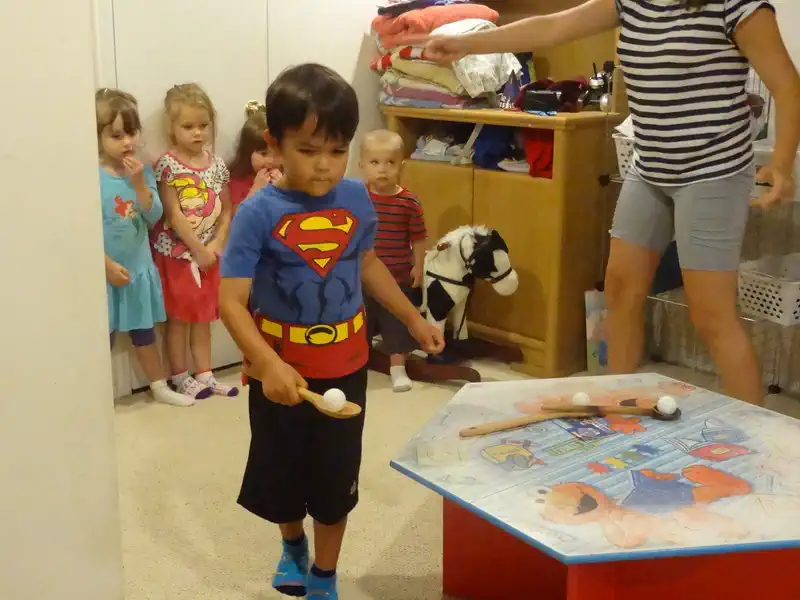
Playing with blocks, paintings, movement games, songs and pretend scenarios gives toddlers chances to practise speaking, problem-solving, coordination and being alongside other children.
A child who sorts objects is experimenting with patterns. One who asks for another turn is learning to communicate a need. Play does not have to look like a classroom lesson to be valuable.
Explore more examples in our play-based activities guide.
Outdoor time: movement and a change of pace
Fresh air and active movement provide a different kind of play from what happens inside. Children may climb, explore the yard, use toys or simply notice what’s changing outside.
Weather and safety conditions determine what is practical on a given day. In winter, dry clothes and safe layering matter. Our winter daycare packing checklist covers the essentials. If weather affects opening hours, check the snow-day guidance.
Meals and snacks are part of the routine
At Diana Daycare, the regular day includes a healthy lunch and two snacks. A predictable time to sit down can help children pause, practise everyday skills and feel included in the group.
Children’s appetites vary. Some eat well at lunch and less at snack, or the reverse. Rather than measuring success by an empty plate, notice how food is offered, whether children are comfortable and whether allergies are handled carefully.
For food preparation and family communication, read our allergy-aware kitchen update.
Rest and quiet time can look different for each child
Many toddlers still need a daytime nap. Others sometimes need quiet, lower-energy activity rather than sleep. A restful part of the day can help everyone reset after a busy morning.
Talk to Diana about what your child needs and how rest arrangements work in her setting. Don’t assume that every child sleeps for the same number of hours or at an identical time. If your toddler’s sleep changes, keep the caregiver informed.
What to borrow for your family’s evenings
You don’t need to recreate daycare after pickup. Try a few familiar anchors: a snack, some outdoor or active time when possible, dinner, a calm activity and a bedtime routine that stays roughly consistent.
- Give a simple warning before transitions: “After this story, we’ll wash our hands.”
- Offer two workable choices rather than an open-ended question.
- Keep the bedtime sequence short enough to repeat on busy nights.
- Make room for rest after a demanding first week of daycare.
A predictable evening can be helpful without expecting toddlers to behave identically every day.
When your child doesn’t follow the schedule
A missed nap or reluctant lunch isn’t a failure. Starting daycare, illness and developmental changes can affect the rhythm. Share patterns you’re seeing at home and ask how the day went in care.
In a small group of no more than five children, Diana can get to know individual habits. Still, the program is group care, so adjustments need to work for everyone’s safety and routines.
Frequently asked questions
What time do children nap?
Use the current daily schedule for published timings and ask Diana how rest is arranged for your child’s age.
What if my child refuses to nap?
Discuss available quiet-time arrangements with Diana. An individual rest plan shouldn’t be assumed without confirmation.
Does outdoor play happen every day?
Outdoor activities are part of the regular rhythm when weather and safety conditions allow.
Is a home daycare routine less structured?
Not necessarily. Small-group home care can still have a consistent sequence of activities, meals, rest and play. Visit and compare the actual day rather than the daycare label.
Diana Daycare is an independent, unlicensed home childcare program in Newmarket for children generally aged 18 months to school age. Explore the daily schedule, see current spaces and rates or arrange a visit. Ask Diana to confirm any individual care arrangements.
This child care program is not licensed by the Government of Ontario.